Views: 0 Author: Site Editor Publish Time: 2026-02-09 Origin: Site


Tool buyers noticed it before any market report confirmed it: a quotation that was valid last quarter suddenly needs revision, lead times stretch, and familiar carbide grades are no longer “always available.” This shift is not accidental. The surge in tungsten and cobalt prices in 2026 is directly reshaping how Cutting Tools are produced, priced, and supplied worldwide. For manufacturers and distributors like Tangli Tools, understanding these material dynamics is essential to help customers maintain stable machining performance, control total costs, and plan procurement with fewer surprises.
Tungsten is rarely used in its raw mined form by end users. Between the mine and a finished cutting tool lies a long chain of processing steps that add both value and risk. Tungsten concentrate must be refined into ammonium paratungstate, converted into tungsten powder, then blended and sintered into carbide powder or rods before it finally becomes tool blanks or finished tools. Any disruption along this chain has an amplified impact on cutting tool supply.
In 2026, buyers are not only facing higher raw material prices but also tighter availability of processed tungsten products. Even when mine output appears stable on paper, bottlenecks in refining capacity or powder processing quickly translate into delayed carbide rods and blank shortages. For cutting tool users, this means longer confirmation cycles and fewer options for “drop-in” replacement grades.
Another reason tungsten prices have surged so quickly is that inventory buffers across the industry have thinned. Over the past few years, many downstream users optimized stock levels to reduce carrying costs. When export controls, energy costs, or environmental regulations tighten upstream supply, the market reacts faster and more sharply. Prices do not rise in smooth increments; they jump, pause, and jump again.
For cutting tool buyers, the key takeaway is that tungsten prices are not simply higher. They are more volatile. This volatility affects quoting accuracy, contract pricing, and long-term project planning, especially for customers running high-volume or automated machining lines.
In cemented carbide, cobalt plays a critical role as the binder that holds hard tungsten carbide grains together. Although cobalt accounts for a relatively small percentage of the overall material composition, it has a disproportionate impact on toughness, impact resistance, and thermal behavior. Adjusting cobalt content can change how a cutting edge reacts to interrupted cuts, vibration, and thermal shock.
As cobalt prices rise, carbide grades with higher binder content become more expensive to produce. Tool manufacturers may respond by adjusting formulations or prioritizing certain grades, which in turn affects availability for end users.
Cobalt supply is highly concentrated geographically, and policy changes in key producing regions quickly ripple through global markets. In 2026, quota-based supply controls and stricter enforcement mechanisms are tightening the availability of cobalt units for industrial use. Unlike tungsten, where processing capacity is a major variable, cobalt pricing is often driven by policy signals and expectations of future constraints.
For cutting tool buyers, this means binder cost volatility adds another layer of uncertainty. Grades optimized for toughness may see sharper price increases than wear-focused grades, even if geometry and coatings remain unchanged.
The most obvious effect is higher tool prices, but focusing only on unit cost misses the full picture. Buyers also encounter longer lead times as manufacturers prioritize certain grades, reduced availability of specific carbide formulations, and increased substitution pressure when a familiar grade cannot be delivered on time.
These changes can disrupt established machining processes. A grade substitution that looks equivalent on paper may behave differently under real cutting conditions, forcing parameter adjustments or increasing scrap risk during ramp-up.
Cutting tool performance depends not only on geometry and coating but also on the internal structure of the carbide. Changes in grain size distribution or binder content can alter edge strength, heat resistance, and wear behavior. A tool with the same flute design and coating may chip earlier or wear faster if the underlying carbide formulation shifts due to raw material constraints.
This is why experienced suppliers emphasize application matching rather than simple SKU replacement. Tangli Tools supports customers by aligning tool material choices with specific machining conditions instead of relying on one-grade-fits-all solutions.
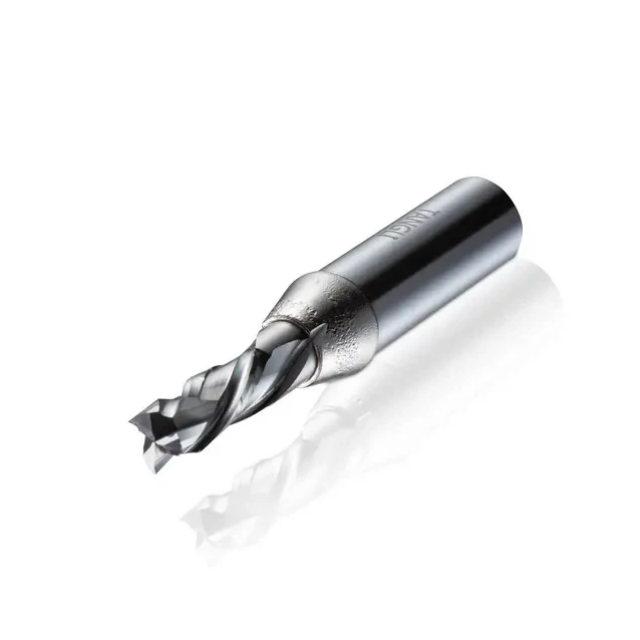
When raw material prices fluctuate, unit price comparisons become less meaningful. The smarter metric is cost per part, which includes tool price, machine downtime, scrap, and changeover time. A slightly higher-priced tool that runs longer and more consistently can reduce overall production costs, especially in high-volume environments.
Many manufacturers are rethinking their purchasing strategies accordingly. Instead of chasing the lowest-priced insert or end mill, they focus on stability and predictability. This shift aligns well with the current market reality, where raw material volatility rewards consistency over short-term savings.
Under-specified tools often show premature flank wear, edge chipping at entry, built-up edge formation, or inconsistent surface finish. These symptoms indicate that the carbide grade or coating cannot handle the thermal or mechanical load of the application.
Over-specification, on the other hand, occurs when users pay for extreme wear resistance or high cobalt toughness in low-abrasion, low-impact applications. In such cases, the additional raw material cost does not translate into meaningful performance gains.
Instead of relying on a single carbide grade for all jobs, many successful buyers now define application buckets based on material family, hardness, and cutting continuity. Continuous cutting of aluminum profiles demands different carbide characteristics than interrupted cutting of alloy steel or abrasive composite materials.
This approach reduces the risk of overpaying for unnecessary performance while ensuring critical applications receive the material support they need.
When prices fluctuate, locking a brand name alone is insufficient. More important is defining the intent of the carbide grade, coating class, edge preparation, and acceptable runout tolerance. Clear specifications help suppliers propose functionally equivalent options even when certain grades face supply constraints.
Tangli Tools works closely with customers to identify these critical parameters, enabling smoother substitutions and more stable production outcomes.
Suppliers with diversified production capabilities and material sourcing can offer alternative tool options when raw material availability shifts. Tangli Tools produces a wide range of solid carbide tools for aluminum profiles, woodworking, furniture manufacturing, and metal cutting, allowing customers to adapt without compromising performance.
Raw Material Driver | What Changes for Cutting Tools | Operational Symptom | Best Mitigation |
Tungsten powder tightness | Quote volatility, longer lead times | Delayed projects, last-minute substitutions | Standardize grades and plan safety stock |
Cobalt supply tightening | Higher cost for tough grades | Unexpected chipping or grade shortages | Match binder content to real cutting needs |
Energy and processing costs | Overall tool price increase | Pressure to downgrade tools | Focus on cost per part, not unit price |
This practical view helps buyers translate market news into actionable decisions. It also highlights the value of working with suppliers who actively manage material risk rather than simply passing cost increases downstream.
The surge in tungsten and cobalt prices in 2026 is not a temporary anomaly but a structural shift affecting how cutting tools are made, supplied, and evaluated. For users of cutting tool solutions, the real challenge is not just paying more but managing volatility through smarter specifications, application-focused choices, and total cost thinking. Tangli Tools, as a professional cutting tool supplier with integrated R&D and manufacturing capabilities, supports customers in navigating these changes with stable performance and adaptable options. To discuss your materials, machines, and current tool challenges, contact us today and explore how our Cutting Tool Series can support your production goals.
Q1: Why do tungsten and cobalt prices affect cutting tool availability so quickly?
Because both materials require multiple processing stages before becoming usable carbide, any upstream disruption rapidly reduces finished tool supply and increases lead times.
Q2: Does a higher-priced carbide tool always last longer?
Not necessarily. Longevity depends on matching the carbide grade and binder content to the application. Over-specification can increase cost without improving performance.
Q3: How can manufacturers reduce risk from raw material price volatility?
By focusing on cost per part, standardizing applications, and working with suppliers who offer alternative grades and tool options when materials tighten.
Q4: How does Tangli Tools help customers adapt to material cost changes?
Tangli Tools provides application-based tool matching, diversified carbide options, and technical support to maintain stable cutting performance despite raw material fluctuations.