Views: 0 Author: Site Editor Publish Time: 2026-07-12 Origin: Site


In high-volume aluminum profile and window fabrication, operational realities often dictate commercial success. Cutting bottlenecks directly impact profit margins. Material waste and poor joint fitment drag down overall production efficiency on the factory floor. You cannot afford to let outdated machinery limit your daily output. This guide provides a clear technical and commercial evaluation framework for transitioning to an upgraded setup. We focus deeply on precision, software integration, and practical production realities. We skip the basic introductory definitions entirely. Instead, we address the actual challenges of machine implementation, calibration, and alignment within modern manufacturing workflows. Whether you run a bustling curtain wall factory or a specialized fenestration shop, modernizing your core cutting tools changes everything. You will learn how automated axis controls and seamless data continuity work together. They eliminate expensive human errors immediately. Upgrading guarantees repeatable accuracy across thousands of consecutive cuts. Let us explore exactly what makes an advanced system the right move for your specific production environment.
Precision at Scale: Upgrading to a fully integrated CNC system mitigates human error, ensuring repeatable tolerances critical for thermal break and structural aluminum profiles.
Software as the Differentiator: Hardware specifications must be matched with seamless optimization software integration (e.g., direct-to-machine cutting lists) to maximize ROI.
Material Adaptability: High-end models support not only heavy-duty aluminum but also PVC profiles, requiring specific clamping and cooling configurations.
Evaluation Criteria: Procurement decisions should weigh blade capacity, axis automation (auto-positioning), and post-sale technical support over initial capital expenditure.
Manual positioning introduces hidden financial drains into your daily workflow. Operators spend valuable minutes adjusting physical stops between every batch. Human eyes inevitably misjudge tape measures during rushed shifts. These micro-delays add up fast across a standard work week. Compound angle errors multiply quickly when operators attempt complex cuts manually. You lose money every time a worker halts production to recalibrate a measuring block. Removing manual intervention stabilizes your baseline productivity.
Modern optimization algorithms save thousands of dollars monthly in raw material costs. Traditional measuring creates unnecessary offcuts. An automated system receives a calculated list. It cuts the exact sequence of pieces needed from a standard extrusion bar. Scrap rates plummet immediately when you rely on digital nesting. An aluminum cutting machine driven by precise software eliminates expensive guesswork. It turns raw inventory into usable product flawlessly.
Defining your production volume thresholds helps justify the equipment upgrade. A small shop cutting thirty frames daily might survive using basic tools. However, processing more than one hundred frames per shift demands serious automation. High throughput requires machines moving continuously without operator hesitation. Upgrading becomes a financial necessity rather than a luxury at this stage. Automated systems maintain a relentless pace. They keep downstream assembly stations constantly fed.
Micro-inaccuracies ruin downstream assembly procedures. A one-millimeter gap at a miter joint destroys weather-stripping integrity. Windows fail their mandatory air and water pressure tests. Water ingress leads to costly site callbacks and damaged reputations. Downstream assembly relies entirely on upfront cutting perfection. You ensure perfect joints by controlling the initial cut precisely. Quality control starts the second the blade touches the metal.
Matching your blade size to your specific profile cross-sections dictates your ultimate capability. Small blades struggle to sever wide extrusions in a single pass. You must review your largest standard profile before selecting a machine.
Blade Diameter | Primary Application | Typical Profile Match |
|---|---|---|
450mm | Standard fenestration | Residential window frames |
500mm | Commercial storefronts | Mid-size structural mullions |
600mm+ | Heavy architectural | Thick curtain wall transoms |
Choosing the correct diameter prevents secondary finishing operations. It ensures a clean, single-stroke slice through heavy material walls.
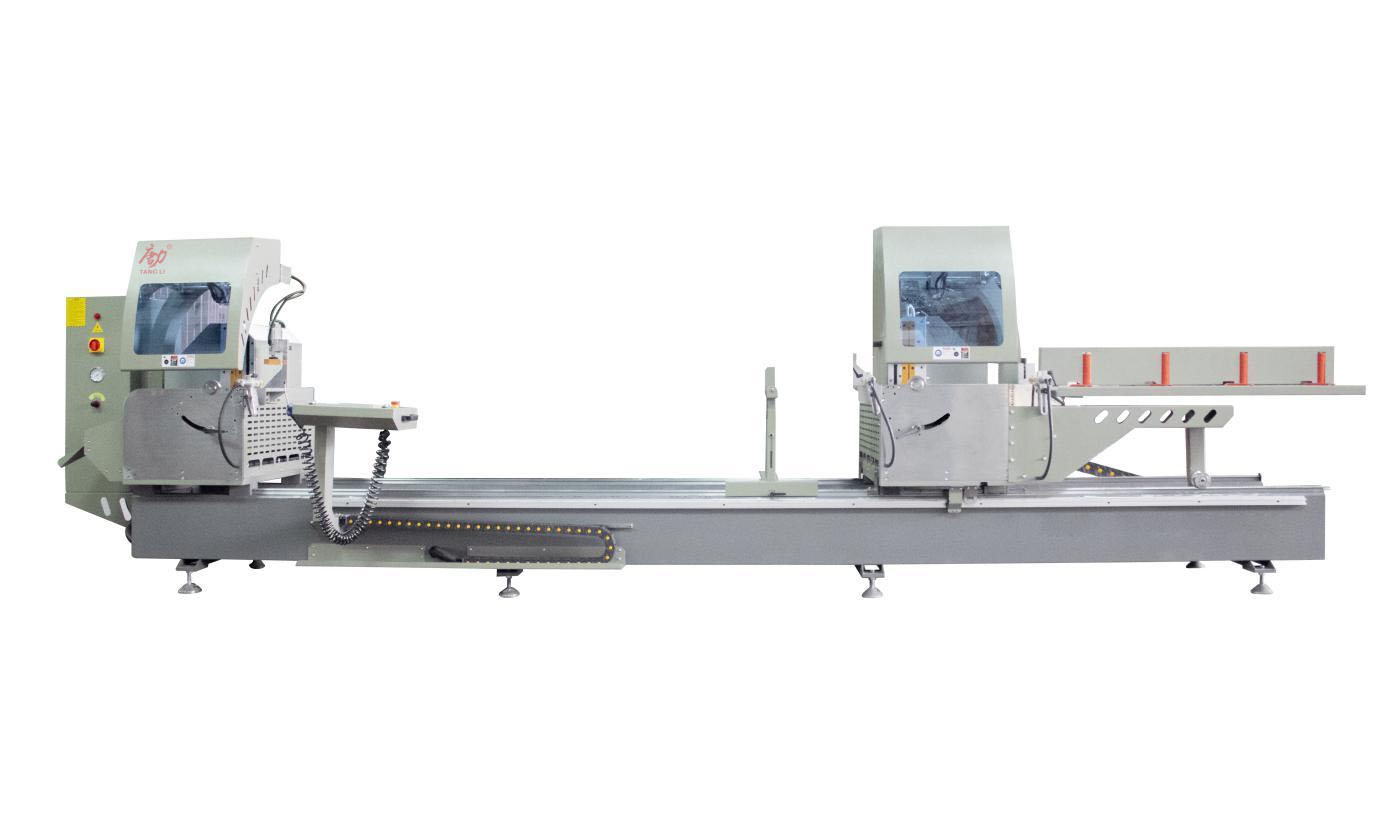
Axis controls define how much manual labor remains in the cutting process. Three-axis systems automatically control the cutting length and the tilting angles of both heads. Four-axis systems add dynamic profile height tracking or sophisticated radial adjustments. Servo-driven motors adjust these angles automatically in milliseconds. Operators never pull manual indexing levers. A high-quality CNC double mitre saw relies on absolute encoders. These encoders guarantee perfect blade positioning every single time.
Cutting standard 45°, 90°, and 135° corners forms the baseline of window manufacturing. However, modern architectural designs frequently demand complex, intermediate angles. You need machines capable of continuous variable tilting. A true angle cutting saw manages odd degrees like 67.5° effortlessly. It locks securely into these intermediate positions without drifting. This flexibility allows you to bid on custom geometrical window contracts confidently.
Vibration destroys dimensional accuracy and shortens blade life. Flimsy machine frames flex under heavy pneumatic clamping loads. Heavy-duty cast iron beds absorb motor resonance effectively. Precision linear guide rails keep the moving cutting head tracking perfectly straight. They dampen the vibrations caused by thick extrusions resisting the blade. Long-term accuracy depends entirely on this heavy, rigid foundational structure.
Data continuity connects your front office directly to the factory floor. Modern cutting centers receive optimized lists via secure network connections or simple USB drives. Operators bypass manual input screens completely. They simply load the corresponding bar stock and press start. This direct link eliminates typographical errors entirely. It ensures the factory produces exactly what the engineering department designed.
Inline label printing keeps complex fabrication routing organized. The machine finishes a slice and immediately prints a durable barcode sticker. The operator applies this sticker directly to the freshly cut profile. Scanners at subsequent milling or assembly stations read this barcode. The label carries detailed hardware routing instructions. This workflow prevents mixed-up parts and lost production time.
Advanced controllers simulate your entire cut virtually before the blade ever spins. The software creates a digital twin of the extrusion and the clamping zone. It checks for physical collisions automatically. You verify complex profile geometries safely on the screen. Operating a cnc double head saw becomes highly predictable. This simulation prevents catastrophic tooling crashes and protects your investment.
Proper clamping secures thin-walled profiles firmly without causing permanent deformation. Fragile thermal break materials crack easily under excessive localized pressure. You need adaptable, multi-directional clamping strategies.
Horizontal clamps: Press the profile tightly against the precision back fence.
Vertical clamps: Hold the material down flat onto the machine bed.
Adjustable regulators: Allow operators to dial down pneumatic pressure for delicate extrusions.
These dynamic systems adapt to odd geometries. They guarantee the extrusion remains perfectly immobile during the saw stroke.
Different materials require entirely different thermal management strategies at the cutting zone. Heavy aluminum processing demands continuous micro-drop lubrication. It sprays a fine mist onto the blade teeth to prevent aluminum from welding to the carbide. Conversely, cutting PVC profiles requires a strictly dry environment. Lubricant ruins the welding preparation on plastic frames. Premium machines feature quick shut-off valves to switch between these modes instantly.
Material density dictates how fast the blade should advance through the extrusion. Variable hydro-pneumatic feeding cylinders allow complete control over this stroke speed. They use an air-over-oil mechanism to push the blade forward smoothly. Thick, heavy extrusions require slow, steady feed rates to prevent motor stalling. Thin extrusions allow for rapid blade advancement. Operators adjust these settings easily to match the specific job requirements.
Installing heavy industrial machinery requires strict facility preparation. A smooth rollout depends on checking several environmental prerequisites beforehand.
Floor Space: Allocate enough room for the six-meter machine bed plus material loading clearances.
Compressed Air: Provide a stable pneumatic supply. Pressure drops cause clamps to release mid-cut.
Electrical Power: Install dedicated three-phase power lines to prevent voltage sags during motor startup.
Meeting these facility conditions ensures the equipment operates exactly as the manufacturer intended.
Industrial cutting stations present serious hazards if improperly managed. Non-negotiable safety features protect your workforce daily. Automatic protective shields must cover the entire cutting zone before the blades engage. Two-hand operation consoles force workers to keep their fingers away from moving parts. Phase-sequence protection stops the motors from running backwards if electrical wiring faults occur. These integrated safeguards prevent tragic workplace accidents.
Heavy fabrication generates massive volumes of sharp metal chips and fine dust. These particles accumulate rapidly inside the machine housing. Aluminum chips clog linear guides and degrade mechanical precision over time. Integrating powerful industrial vacuums pulls this debris away instantly. Clean guide rails maintain smooth cutting head movement. Reliable extraction keeps the workshop environment clean and protects internal mechanical components.
Transitioning to automated machinery shifts the skill requirements on your floor. Traditional machinists must adapt to entirely new digital workflows. They transition into system managers rather than manual laborers. Software literacy becomes significantly more important than reading an analog tape measure. You must allocate time for proper training. Empower your staff to understand error codes, navigate the controller interface, and execute routine diagnostic checks.
You must establish clear, measurable objectives before signing purchase orders. Define what success looks like for your specific production line. Track your current scrap percentage meticulously. Measure your baseline cycle time per assembled frame. You need hard data to gauge the new machine's true impact. Investing in a double head miter demands strict performance key performance indicators (KPIs).
Do not purchase complex machinery based solely on glossy brochure specifications. Demand physical validation from the manufacturer. Send them bundles of your most complex, proprietary profile extrusions. Ask the vendor to cut your parts and film the entire process. Inspect the resulting joint fitment personally. Verify their standard clamping blocks secure your specific shapes without scratching the powder coating.
Even the best machines experience occasional electronic faults or mechanical wear. Fast, reliable vendor support keeps your production line running profitably. Check their regional spare parts inventory carefully. Ensure they stock critical servo motors, replacement blades, and pneumatic valves locally. Ask if their technicians can log into your CNC controller remotely. Remote internet diagnostics solve most software glitches in minutes instead of days.
A modern CNC double head saw functions as much more than a simple cutting tool. It serves as an integrated data and precision node within your fabrication facility. It executes digital instructions flawlessly and removes expensive human guesswork. Precision becomes an automated, daily guarantee rather than a constant operational struggle. Upgrading aligns your factory floor with the demands of modern architectural design.
Your immediate next step is conducting a thorough internal audit. Identify your exact cutting bottlenecks and measure your current scrap rates. Compile a standardized portfolio of your most frequently used profiles. Share this data directly with potential vendors. Force them to prove their machine matches your specific capability requirements before you invest.
A: High-quality machines consistently achieve a length accuracy of ±0.1mm. Angle positioning precision reaches exact degrees, usually within a ±0.1° tolerance. These tight benchmarks ensure perfect miter joints and eliminate gaps in weather-stripping.
A: Yes. Many high-end models handle both materials effectively. However, operators must change to PVC-specific blades, adjust the feed rates, and turn off the micro-drop lubrication system to maintain a dry cut.
A: Optimization software utilizes advanced nesting algorithms. It calculates the most efficient combination of required cut lengths and groups them into standard 6-meter extrusion bars. This maximizes material yield and drastically reduces scrap offcuts.
A: Hydro-pneumatic systems use air-over-oil mechanics to push the blade smoothly at a constant, manually adjusted rate. Servo-driven systems use electronic motors to offer fully programmable, highly variable feed speeds for complex profiles.
A: Daily maintenance involves clearing metal chips from the machine bed trays. Operators should also check air-line lubricator fluid levels, wipe down electronic safety sensors, and inspect blade teeth for dullness or carbide chipping.