Views: 0 Author: Site Editor Publish Time: 2026-07-13 Origin: Site


Transitioning from outsourced sharpening to in-house tool maintenance takes careful planning. You must move past basic operational metrics. You need to evaluate hard return on investment, equipment precision, and automation reliability. Relying on third-party sharpening services often introduces unpredictable lead times into your workflow. It creates higher lifecycle costs per blade. You also face inconsistent cut quality. These issues directly impact downstream manufacturing. They delay final product delivery and frustrate your clients.
This guide provides a clear evaluation framework. We focus on automation levels and technical specifications. You will understand vital implementation realities. We help you evaluate a saw blade grinding machine for your facility. By understanding these core factors, you can ensure a high-confidence procurement decision. You will turn a recurring operational headache into a controlled, highly predictable internal asset.
In-house ROI depends on volume: Justifying a saw blade grinding machine requires calculating current outsourcing costs against the machine's amortization, operator time, and consumable overhead.
Automation dictates consistency: CNC-controlled automatic sharpening equipment minimizes operator error and ensures exact replication of complex tooth geometries (e.g., ATB, Triple Chip).
Coolant and filtration matter: High-precision grinding requires robust wet grinding systems to prevent thermal damage to carbide tips and extend the life of diamond or CBN wheels.
Implementation requires footprint planning: Industrial tool maintenance machines require specific environmental controls, including proper exhaust, stable power, and vibration isolation.
Making the leap to internal maintenance requires a hard look at your current numbers. You must analyze your daily operational limits. You need to uncover hidden inefficiencies in your supply chain.
Define the specific tipping point for your shop. When do daily blade swaps justify the cost? Count your weekly blade consumption accurately. If you replace dozens of blades weekly, outsourcing costs add up extremely fast. Compare your external monthly sharpening bills against internal setup costs. An in-house setup becomes financially viable when external costs exceed internal amortization and operator wages.
Analyze the true cost of halted production. Waiting for dull blades stops your entire manufacturing line. Idle operators cost you money. Missed shipping deadlines damage your reputation. An in-house saw blade sharpener provides immediate, on-demand availability. You regain absolute control over your production schedule. You never wait for a delivery truck again.
Controlling the grinding process extends your tool life significantly. Expensive TCT (Tungsten Carbide Tipped) blades degrade quickly if mishandled. Third-party vendors frequently over-grind carbide tips. They remove too much material to save setup time. Grinding your own tools prevents this excessive wear. You remove only the microscopic layer necessary to restore the edge. This practice maximizes the usable life of both TCT and HSS (High-Speed Steel) inventory.
Do not ignore the hidden logistics of outsourcing. You pay for shipping heavy tools back and forth. You suffer from severe inventory bloat. You must keep extra blades in rotation just to cover transit times. Administrative overhead also wastes valuable management hours. Processing purchase orders takes time away from core tasks. You lose money managing the logistics.
Ignoring the labor cost of packing and shipping dull blades.
Failing to track the exact number of regrinds per blade.
Accepting poor cut quality as a normal operational variance.
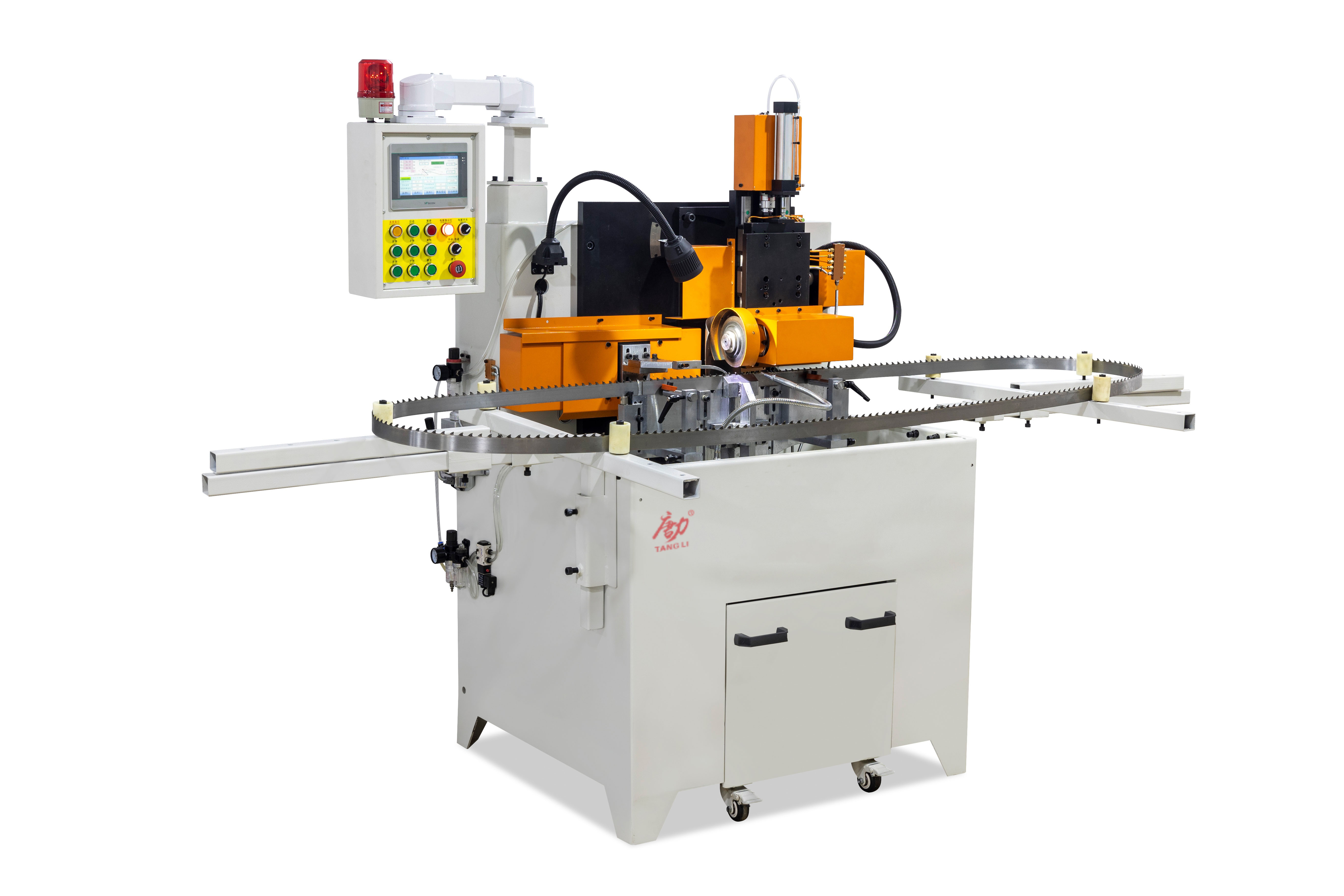
Choosing the right architecture depends heavily on your production volume. It also depends on the complexity of your tool geometries.
High-volume shops require advanced solutions. CNC machines easily handle multi-geometry requirements. They feature multi-axis control. They typically utilize three to five distinct axes. This allows grinding the face, top, and sides in a single continuous setup. An automatic grinder ensures perfect repeatability. It removes human error entirely from the grinding equation.
Mid-volume facilities benefit greatly from semi-automatic models. These shops usually process highly standardized blade types. The machine handles automated indexing. It also controls the exact grinding stroke. However, you must perform manual setups. Operators adjust angles and tooth shapes by hand before initiating the cycle. They balance affordability against manual intervention.
Different blade materials demand highly specific mechanical setups. Using the wrong configuration ruins the blade instantly.
TCT & Carbide: Requires diamond grinding wheels. It demands high-pressure coolant to prevent heat fractures.
HSS & Cold Saws: Requires CBN (Cubic Boron Nitride) wheels. Operators must use specific stroke programming.
Feature | CNC Automatic Grinder | Semi-Automatic Machine |
|---|---|---|
Production Volume | High (100+ blades/week) | Medium (30-100 blades/week) |
Geometry Flexibility | Excellent (Programmable ATB, Triple Chip) | Limited (Requires manual angle adjustment) |
Operator Involvement | Very Low (Load and start) | Moderate (Setup required between batches) |
Initial Investment | High | Moderate |
You cannot judge a machine purely by its outward appearance. You must dig into the mechanical and software components. These elements dictate the long-term reliability of your investment.
You must evaluate indexing accuracy carefully. Look for heavy-duty cast iron bases. Polymer concrete beds also work exceptionally well. They absorb harmful vibrations during operation. Vibration is the enemy of sharp edges. A solid base guarantees micron-level grinding tolerances. It ensures every tooth matches perfectly.
Assess the spindle runout before purchasing. Check the continuous motor horsepower ratings. A stable, direct-drive spindle prevents wheel deflection. Deflection ruins tooth geometry during heavy stock removal. A weak motor bogs down during deep cuts. This causes burning and uneven edges.
CNC models feature complex user interfaces. Can the system store hundreds of blade profiles? Does it allow easy input of custom tooth pitches? Variable geometries require flexible software. Good blade sharpening equipment simplifies this process. Operators should navigate menus intuitively. Complex programming screens cause unnecessary errors and delays.
Proper cooling prevents catastrophic thermal damage. Inadequate cooling causes micro-cracking in carbide tips. Once cracked, the tip fails during the next cut. Look for high-capacity multi-stage filtration. Magnetic separators and paper filters are essential here. They keep the grinding oil perfectly clean. Clean coolant dramatically extends wheel life. It flushes away abrasive swarf efficiently.
Test coolant concentration levels weekly.
Replace paper filter media before it clogs completely.
Monitor coolant temperature to prevent thermal shock to the blade.
Buying the equipment is only the first step. Installing it correctly dictates your future success. You must prepare your facility and your team.
Automatic grinders reduce intensive manual labor. However, setting up the machine requires baseline technical competence. Operators must master centering procedures. They must understand precise angle calibration. Always factor in vendor-provided training. Your team needs comprehensive instruction. They must learn how to dress the wheels properly. They must recognize warning signs of mechanical wear.
Wet grinding produces hazardous oil mist. Ensure your machine integrates seamlessly with air filtration units. Mist extraction keeps your shop compliant with occupational health standards. It protects your workers' lungs. Assess noise enclosures carefully. High-speed grinding generates significant decibels. Verify emergency stop protocols are easily accessible from any angle.
Transparently map out your recurring operational costs. You must buy diamond or CBN wheel replacements regularly. Synthetic grinding oil requires periodic topping off. Sensors and measuring probes need regular calibration. Do not ignore these ongoing expenses. Proper maintenance prevents sudden machine failures. It keeps your tolerances tight over years of use.
Industrial machines require proper infrastructure. Verify your exact floor loading capacity. Leave ample clearance for loading large diameter blades. Ensure your compressed air supply remains perfectly stable. Fluctuating electrical power disrupts sensitive CNC controllers. You may need a dedicated power conditioner. Vibration from nearby stamping presses can ruin grinding accuracy. Isolate the machine properly.
Utility Requirement | Standard Specification | Why It Matters |
|---|---|---|
Electrical Power | 3-Phase, 400V (typical) | Maintains consistent spindle RPM under load. |
Compressed Air | 6-8 Bar, Dry/Filtered | Powers pneumatic clamps and indexing fingers reliably. |
Floor Stability | Level concrete pad | Prevents micro-vibrations from translating to the blade edge. |
Ventilation | Mist extraction ducting | Removes atomized coolant oil from the breathing zone. |
Do not base your purchase on a generic brochure. You need a structured approach to selection. Evaluate machines against your specific reality.
Audit Your Blade Inventory: Document your current tooling details extensively. Measure minimum and maximum blade diameters. Record all arbor hole sizes. Note all tooth geometries currently in use. Do not buy a tool maintenance machine that limits your future upgrades. It must handle your largest and smallest blades comfortably.
Demand Proof of Performance: Require manufacturers to perform a live test grind. Send them your actual dull blades. Measure the return geometry precisely. Check the finish quality against original OEM specifications. If they refuse a test grind, walk away immediately.
Assess Vendor Support: Evaluate the service level agreement thoroughly. Ask about replacement parts availability. Proprietary CNC boards fail occasionally. Sensors break down over time. Ensure you have access to localized technical support. Waiting weeks for a specialized technician kills your production schedule.
Investing in a high-quality machine fundamentally shifts your operational model. It turns a recurring maintenance headache into a highly controlled internal asset. You gain independence from external vendors. You dictate your own quality standards.
As you move forward, prioritize structural vibration reduction over raw grinding speed. Focus heavily on advanced coolant management systems. Choose an intuitive software interface to reduce operator training time. These three factors guarantee long-term success.
Take action today by requesting a customized return calculation based on your current volumes. Schedule a rigorous demonstration with a technical sales engineer. Evaluate their machine capabilities against your specific blade inventory. Bring your tool maintenance in-house and secure your production timeline.
A: Yes, but it requires swapping grinding wheels. You must use diamond wheels for TCT and CBN wheels for HSS. You also need to adjust your RPM and coolant settings drastically. While this is possible, high-volume shops usually prefer dedicated machines for each material to avoid tedious changeovers.
A: Modern conversational programming takes only a few days to learn. Navigating the touchscreen is highly intuitive. However, mastering optimal feed rates takes real experience. Operators need several weeks to confidently dress wheels, calibrate probes, and troubleshoot minor surface finish issues effectively.
A: Replacement depends entirely on your material removal rates. A high-quality diamond wheel might last for hundreds of standard regrinds. Resin bond wheels require frequent dressing to expose fresh abrasive grains. Using a clean, highly filtered synthetic coolant significantly extends the lifespan of any wheel.
A: No. Fully automatic CNC models run completely unattended after the initial setup. Once the operator loads the blade and presses start, the machine handles indexing and grinding automatically. This frees your operator to perform other valuable shop tasks while the blade is being sharpened.