Views: 0 Author: Site Editor Publish Time: 2026-07-15 Origin: Site


High-volume CNC routing in abrasive materials often forces a frustrating compromise on the shop floor. You constantly balance aggressive feed rates against acceptable cut quality and overall tool lifespan. Working on dense composites like MDF, melamine, and high-pressure laminates destroys standard straight bits fast. They cause severe tear-out, pack channels full of dust, and generate excessive heat at high machine speeds. Solid carbide options solve some cutting issues quickly, but they become prohibitively expensive for large-diameter profiling operations.
We will evaluate the specific mechanical advantages and daily implementation realities of upgrading your current tooling strategy. You will discover how transitioning to a specialized design transforms heavy-duty production workflows. We will explore the exact engineering principles, required CNC parameter adjustments, and practical benefits for demanding applications. Upgrading your spindle setup requires deep knowledge of geometry and material science. You will learn exactly how to maximize your return on investment through smarter tool selection.
Geometry Advantage: The staggered chip breaking bit design reduces spindle load and dissipates heat by shearing waste into smaller particles rather than continuous strips.
Flute Count Sweet Spot: A 3 flutes cutter provides a higher feed rate capability than a 2-flute bit, with better chip evacuation than a 4-flute bit.
Cost-to-Performance: Tungsten Carbide Tipped (TCT) construction marries the shock-absorbing properties of a steel body with the wear resistance of carbide, lowering the cost-per-linear-foot in abrasive milling.
Operational Requirement: Requires strict adherence to calculated chip loads; under-feeding will cause carbide degradation through friction heat.
Standard cutting edges slice continuously through material. This action creates long, continuous shavings during the routing process. These large shavings quickly fill the cut channel. Once the channel packs full of waste, friction spikes immediately. Heat cannot escape the cutting zone efficiently. High heat softens the carbide edge and scorches your workpiece.
Staggered cutting edges completely disrupt this continuous cutting action. A chip breaking bit features strategic gaps along its cutting profile. These gaps force the tool to shear waste into tiny, manageable particles. Smaller particles evacuate rapidly through the dust collection hood. They never stay long enough to pack the cut channel tightly. This fast evacuation significantly reduces the risk of tool breakage. It also prevents unsightly workpiece burning during heavy passes.
Choosing the right flute count changes everything. Single or double flute geometries provide massive chip clearance volume. However, they lack stability at high feed rates. Four-flute designs run incredibly smoothly. Yet, they lack the physical space between flutes to clear large volumes of composite dust.
A 3 flutes cutter occupies the perfect mechanical sweet spot. It offers significantly higher feed rate capabilities than a standard two-flute tool. Three contact points constantly engage the material during spindle rotation. This constant engagement stabilizes the tool perfectly in the cut. It drastically reduces chatter and eliminates harmonic vibration entirely. You can push your CNC machine much faster while maintaining a flawless edge finish.
Deflection ruins part tolerances and snaps tools unexpectedly. Lateral force pushes against the side of the bit during movement. Staggered chip-breaking geometry reduces this cutting resistance naturally. Combining three flutes creates a beautifully balanced radial force. The spindle experiences far less lateral stress. Bearings last longer, and cut dimensions remain perfectly accurate across the entire sheet.
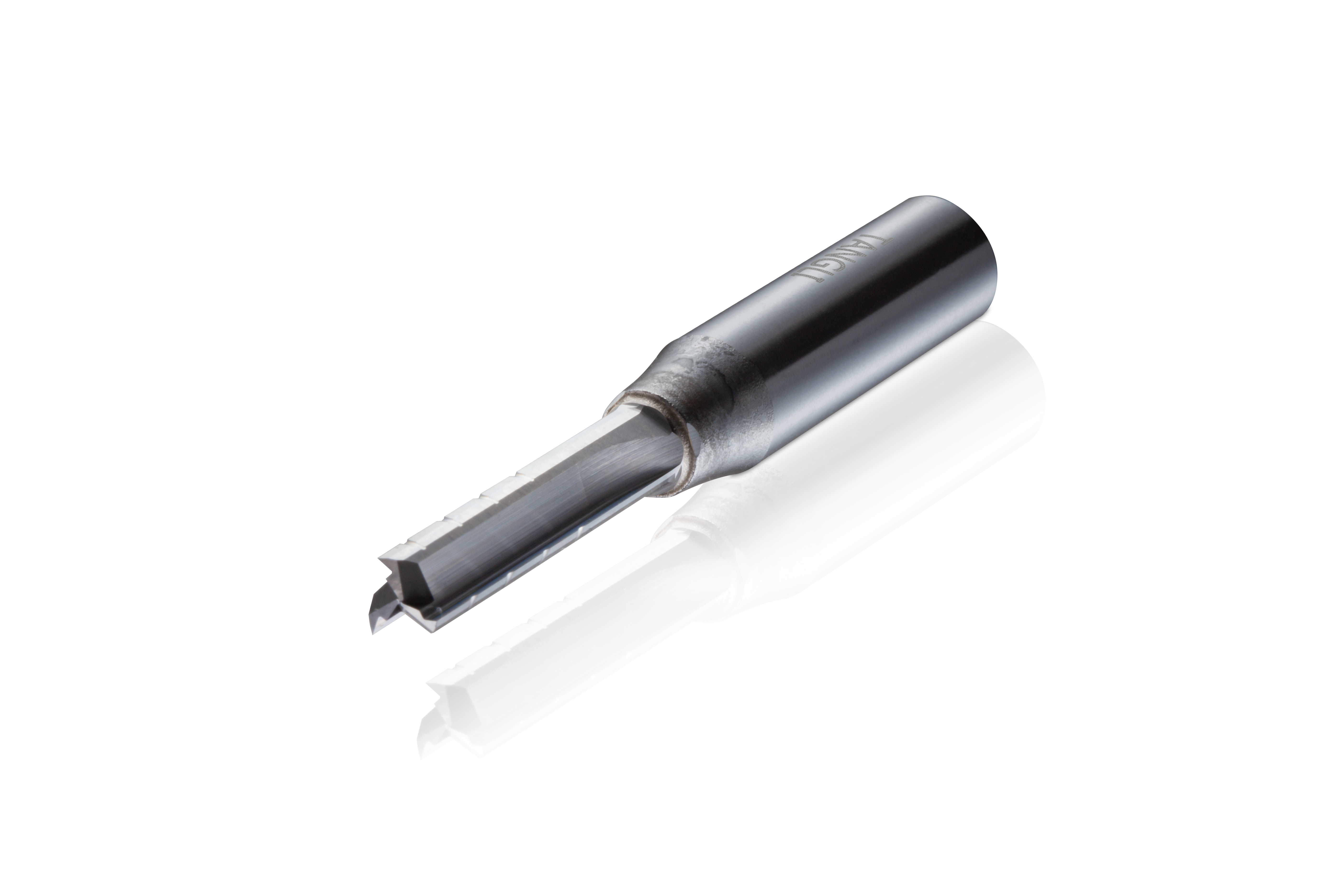
Understanding tool architecture helps you make smarter purchasing decisions. A solid carbide tool consists of one single, hardened material block. It cuts exceptionally well but carries inherent physical limitations. Conversely, a tct router bit 3 flutes utilizes a highly effective hybrid construction approach. Manufacturers machine a high-tensile steel body first. They then braze specialized carbide inserts directly onto this flexible core.
This hybrid material architecture delivers incredible shock resistance. Industrial loads place massive stress on high-speed tooling. Solid carbide remains extremely brittle under sudden impact. If a solid bit hits a hard knot, it often snaps instantly. Resin pockets and hidden material inconsistencies destroy brittle edges.
Steel bodies flex slightly under these exact same heavy loads. This microscopic flexibility acts as a built-in shock absorber. The tool survives sudden density changes in cheap plywood or composite panels. You experience far fewer catastrophic tool failures during long production runs. Less breakage means higher uptime for your entire shop floor.
Economic viability matters deeply in high-volume environments. You must balance upfront capital expenditure against ongoing operational expenses. Solid carbide bits demand a massive initial investment. This premium pricing makes sense for tiny engraving bits. However, costs skyrocket exponentially as tool diameter increases.
For larger diameter bits exceeding 1/2 inch or 12mm, TCT construction dominates. You pay a fraction of the solid carbide price. The brazed carbide edges still deliver outstanding wear resistance in abrasive cuts. This approach is highly ideal for operations experiencing diminishing returns on expensive tooling. You stop paying premium prices for tools destined to hit hidden staples or dense glue lines.
Tool Characteristic | TCT (Tungsten Carbide Tipped) | Solid Carbide |
|---|---|---|
Body Material | High-tensile steel core | 100% micro-grain carbide |
Shock Resistance | Excellent (steel flexes slightly) | Poor (highly brittle under shock) |
Large Diameter Cost | Highly economical | Prohibitively expensive |
Best Application | Abrasive composites, roughing | High-gloss finishing, non-ferrous |
You must match your tooling strictly to your daily materials. An industrial milling cutter excels in very specific production environments. Abrasive composites represent the most common application for this geometry. MDF, particleboard, and melamine contain harsh glues and abrasive resins. Standard straight edges dull rapidly when cutting these dense sheets. The segmented cutting action breaks up abrasive fibers easily. Your edge stays sharper for a much longer duration.
Plywoods and natural hardwoods also benefit immensely from this design. Cross-grain cuts traditionally cause severe tear-out on delicate veneers. Standard bits pull and rip the wood fibers upward. The chip breakers introduce a localized shearing action. They cut the fiber bundles into tiny sections before they can splinter. You get exceptionally clean top and bottom edges on expensive veneered plywood.
Consider the following optimal use cases for your daily operations:
High-speed nesting of melamine-faced particleboard cabinets.
Rapid profiling of thick MDF doors and structural components.
Through-cutting dense birch plywood for internal furniture frames.
Slotting operations in laminated commercial countertop materials.
However, you must acknowledge clear mechanical limitations to maintain operational trustworthiness. Chip-breaking geometries leave microscopic striations on the cut edge. These marks disappear instantly under edge banding or sanding. Still, they ruin ultra-high-gloss acrylics. Do not use this tool for finishing passes on clear plastics. Furthermore, non-ferrous metals like aluminum require specialized tooling. You need a continuous-edge solid carbide O-flute for those specific materials. Always match the bit to the exact finish requirement.
Upgrading your tooling requires immediate changes to your CNC software parameters. Calculating the correct chip load remains the core metric for daily success. Chip load dictates the exact physical thickness of the material removed by each flute per revolution.
Many operators make a critical mathematical error. They switch from a two-flute bit to a three-flute bit but leave their feed rates identical. A three-flute tool demands a 33% increase in feed rate compared to a two-flute tool running at the same RPM. If you do not increase the machine speed, the chip thickness drops dangerously low.
Heat acts as the ultimate enemy of cutting tools. If your feed rate drops too low, the cutting edge rubs against the material rather than biting into it. Rubbing generates immense friction heat instantly. This heat degrades the carbide binder and ruins the bit prematurely. The segmented design certainly mitigates some heat generation. However, mechanical advantages cannot fix severely incorrect CNC parameters. You must program aggressive feed rates to keep the tool cool.
CNC Feed Condition | Cutting Action | Heat Result | Tool Impact |
|---|---|---|---|
Feed Rate Too Slow | Rubbing & burnishing | Extreme heat buildup | Rapid carbide degradation |
Optimal Feed Rate | Clean shearing | Heat escapes into chips | Maximum tool lifespan |
Feed Rate Too Fast | Forced gouging | Minimal heat | Tool deflection or snapping |
Driving a three-flute bit at these required optimal feed rates demands substantial power. Chip breakers definitely reduce overall cutting resistance. Yet, pushing three flutes into dense material quickly requires adequate spindle torque. Ensure your CNC router possesses sufficient horsepower. A weak spindle will stall or lose RPM under these aggressive cutting conditions. Always check your machine specifications before programming high-speed nesting runs.
Not all cutting tools perform equally on the shop floor. You must evaluate specific manufacturing details when selecting a TCT straight bit. Visual inspection rarely reveals the true structural integrity of the tool.
First, demand details about the brazing process. The joint between the steel body and the carbide insert handles immense stress. Look for silver-copper-silver tri-foil brazing. This specific three-layer braze acts as a microscopic cushion. It absorbs brutal shock loads between the rigid steel and the hard carbide. Cheap single-layer brazing fails quickly under heavy lateral forces.
Second, verify the exact carbide grade used on the inserts. Industrial environments demand exceptional edge retention. Specify tools manufactured with micro-grain or sub-micro-grain carbide formulas. C3 or C4 grade carbide provides the necessary hardness to survive abrasive glue lines. Standard commercial carbide dulls far too quickly in particleboard.
Third, check the runout tolerance guarantees. Total Indicator Reading (TIR) measures how perfectly concentric the tool spins. High-quality industrial bits should guarantee a TIR of less than 0.002 inches. Excessive runout means one flute does all the heavy cutting work. This imbalance causes premature edge wear and leaves a terrible finish on your machined parts.
Follow these essential criteria when evaluating manufacturers:
Request brazing specifications: Reject bits lacking tri-foil shock-absorbing alloys.
Confirm micro-grain composition: Ensure the carbide withstands harsh composite resins.
Demand low runout tolerances: Keep TIR below 0.002 inches for perfectly even wear.
Verify dynamic balancing reports: Prevent critical spindle damage at high speeds.
Finally, ensure the manufacturer specifies dynamic balancing. Most CNC spindles operate between 18,000 and 24,000 RPM. An unbalanced tool creates catastrophic harmonic vibrations at these speeds. Dynamic balancing removes microscopic amounts of steel from the tool body. This process ensures perfectly smooth rotation, protecting your expensive spindle bearings from premature failure.
Adopting specialized tooling transforms high-capacity manufacturing processes fundamentally. The 3-flute chip-breaking TCT bit serves as a formidable workhorse solution for busy cabinet shops and composite millers. It prioritizes rapid, aggressive material removal and exceptional tool durability over ultra-fine finishing passes. You gain the shock resistance of a flexible steel body alongside the aggressive cutting power of segmented carbide.
Take clear action to optimize your daily production floor today. Audit your current scrap rates, track your monthly tool replacement costs, and review your CNC software feed parameters carefully. Calculate your current chip loads to identify inefficient rubbing issues. Test a dynamically balanced, tri-foil brazed cutter on your most abrasive MDF or melamine sheets. Measuring the precise performance delta on your own machines will determine if this structural upgrade yields a positive return on investment for your specific production line.
A: Yes, but only professional grinding services should perform this task. The complex profile of the staggered chip breakers must be precisely maintained during sharpening. Grinding inevitably decreases the overall tool diameter slightly. You must measure the new diameter accurately and input toolpath compensation adjustments into your CAM software before running parts.
A: Optimal RPM depends entirely on the specific tool diameter and the material density. Generally, operational speeds range between 16,000 and 20,000 RPM. You should never guess your machine settings. Always calculate your exact RPM based on the target chip load required for your specific material to prevent dangerous heat buildup.
A: TCT straight configurations cost significantly less to manufacture and purchase than solid carbide spirals. They deliver a completely neutral cutting action. This neutral geometry prevents the lifting of thin workpieces, unlike aggressive up-cut spirals. It also avoids packing dust into the cut channel floor, unlike down-cut spirals. They remain highly versatile for through-cuts.