Views: 0 Author: Site Editor Publish Time: 2025-11-26 Origin: Site


Precision cutting in woodworking, metalworking, and industrial applications relies heavily on band saw blades—continuous loops of toothed metal designed to handle a variety of materials. Their ability to deliver smooth, accurate cuts makes them essential tools for both hobbyists and professionals.
Properly measuring a band saw blade is critical to ensure it fits your saw correctly, performs efficiently, and operates safely. Using an incorrectly sized blade can lead to uneven cuts, accelerated wear, or even accidents.
This guide provides a step-by-step approach to measuring a band saw blade accurately, helping you achieve optimal performance and maintain safety in your workshop.
Measuring a band saw blade accurately is essential for achieving precision, efficiency, and safety in your cutting projects. Here’s why it matters:
A correctly measured band saw blade ensures it fits snugly on the saw’s wheels and within the frame.An ill-fitting blade can slip or derail, leading to poor cuts and potential damage to the machine.Proper fit also reduces wear on the blade and extends its lifespan.
The right length and width allow the band saw blade to maintain consistent tension during cutting.Accurate measurements prevent uneven cuts, wobbling, and excessive vibration.Correct sizing ensures smoother operation, reduces machine strain, and enhances overall cutting precision.
Incorrectly sized blades can create unsafe tension levels, increasing the risk of snapping or binding.A properly measured band saw blade minimizes the chance of accidents caused by derailment or unexpected blade movement.Regular measurement checks help maintain safe operating conditions, especially in high-speed or heavy-duty applications.
Accurate measurement of a band saw blade requires the right tools. Using proper measuring instruments ensures precision and avoids mistakes that could affect performance and safety.
A standard measuring tape or ruler is essential for determining the length and width of the band saw blade.Ensure the measuring device is long enough to accommodate the full blade length if uncoiled, or use multiple measurements for very long blades.Always lay the blade flat to avoid errors caused by twists or bends.
Calipers are ideal for measuring the tooth size and pitch of the band saw blade with high precision.They are especially useful for specialized or fine-tooth blades used in woodworking or metalworking.Using calipers helps ensure the blade will perform efficiently and fit your saw guides accurately.
Record all measurements immediately to avoid confusion or errors later.A notebook or labeling tool is useful for cataloging multiple band saw blades, especially in workshops with different sizes and types.Keeping accurate records helps maintain proper blade management and ensures the correct blade is selected for each task.
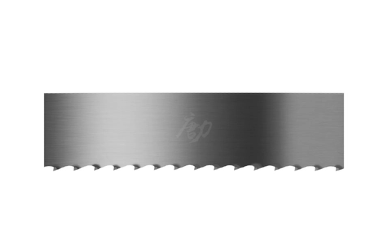
Accurate measurement of a band saw blade is essential for proper fit, optimal performance, and safe operation. Follow these steps carefully:
Fully uncoil the band saw blade or, if not possible, measure along the looped path of the blade.Use a tape measure to determine the total length precisely.Double-check by measuring twice to ensure accuracy, as even small errors can affect fit and performance.
Measure the width of the blade from the base to the tip of the teeth.Ensure that this width corresponds with your saw’s blade guides to prevent misalignment during cutting.Proper width measurement ensures smooth operation and reduces the risk of blade twisting or binding.
Count the number of teeth per inch (TPI) to confirm uniformity across the blade.Use calipers for precise measurement, especially for specialized cuts or fine-tooth blades.Correct TPI measurement ensures cutting efficiency, clean cuts, and longer blade life.
Measure the metal thickness to verify compatibility with your saw and workpiece.Note whether the blade is standard, bi-metal, or carbide-tipped, as this affects cutting performance and durability.Accurate thickness measurement prevents stress on the blade and the saw during operation.
Measuring a band saw blade may seem straightforward, but mistakes can compromise both performance and safety. Here are common errors to watch out for:
A bent or twisted band saw blade gives inaccurate measurements, leading to poor fit and uneven cutting.Always lay the blade flat and untangled before measuring.
Inspect the blade for kinks or warping that could affect length, width, or tooth pitch readings.
Failing to note the measurements immediately can result in confusion, especially if you have multiple blades of different sizes.Keep a notebook or labeling tool nearby to record the length, width, tooth size, and thickness.Accurate records make future blade replacement or matching much easier and more reliable.
The orientation and width of the band saw blade must match the saw’s blade guides.Overlooking this detail can lead to poor cutting performance, blade misalignment, or even machine damage.Always check both the teeth direction and blade width before installation.
Accurate measurement is crucial for the performance, efficiency, and safety of a band saw blade. Following these practical tips ensures precision and helps maintain the blade’s longevity while avoiding operational issues.
Place the band saw blade on a clean, flat surface before measuring.
Ensure there are no twists, kinks, or bends that could distort the readings.
A flat blade provides a true measurement of both length and width, ensuring the blade will fit correctly and function properly during cutting.
Choose either inches or millimeters and stick with that unit throughout the measurement process.
Consistency helps avoid errors when comparing measurements to saw specifications or ordering replacement blades. Using the same units also simplifies documentation and future reference.
Always measure twice to confirm accuracy before recording or purchasing a new blade.
Verify length, width, tooth pitch, and thickness to prevent mismatches that could affect performance, safety, or the quality of your cuts. Double-checking ensures you avoid costly mistakes and keeps your band saw blade operating efficiently.
Accurately measuring a band saw blade is a fundamental step for anyone working with woodworking or metalworking equipment. Correct measurement ensures the blade fits precisely on the saw’s wheels and frame, delivers smooth and even cuts, and operates safely under the machine’s tension. Overlooking this step can lead to misalignment, uneven performance, or even accidents during operation.
By paying attention to the blade’s length, width, tooth pitch, and thickness, users can maximize both efficiency and longevity. Regular measurement also helps identify wear or damage early, allowing for timely replacement and preventing costly downtime.
Incorporating accurate band saw blade measurement into your routine maintenance is not just about precision—it’s about creating a safer, more reliable, and professional workspace. Whether you are a hobbyist, craftsman, or industrial operator, making measurement a standard practice ensures your tools perform at their best, your cuts remain precise, and your blades last longer.