Views: 0 Author: Site Editor Publish Time: 2026-07-08 Origin: Site


Fabricating electronic components demands absolute precision and strict consistency. Manufacturers constantly face high-stakes scenarios when machining delicate aluminum enclosures, stainless steel brackets, or complex PCB substrates. Even minor thermal distortion or micro-burrs will cause immediate part rejection during quality control. Traditional abrasive discs generate excessive friction and extreme heat during standard operations. You simply cannot afford melted edges or warped composite boards in sensitive, high-value electronics applications.
Industry standards now heavily favor tungsten carbide tipped solutions for these exacting tasks. A reliable tct saw blade electronic cutting guarantees tighter tolerances through highly efficient cold-cutting mechanics. This guide provides procurement managers and fabrication engineers an evidence-based framework for tooling selection. You will learn how to accurately evaluate and source an optimal electronic cutting blade for rigorous daily production environments. We explore specific tooth geometries, detailed material compatibilities, and critical machinery requirements to fully optimize your fabrication workflow.
TCT saw blades mitigate thermal damage by transferring heat into the chip rather than the electronic substrate or enclosure.
Tooth geometry (specifically TCG - Triple Chip Grind) and tooth count (high ATDC) are the primary indicators of a blade's suitability for electronic-grade precision.
Switching to a TCT industrial saw requires rigid machinery; excessive spindle runout will cause premature carbide chipping.
Total Cost of Ownership (TCO) is justified not by the initial blade cost, but by the elimination of secondary deburring operations.
Electronic enclosures require exacting tolerances. Thin-wall steel frames and extruded aluminum housings leave absolutely no room for error. When you cut composite boards like FR4 or specialized polymers, your margin for dimensional deviation remains virtually zero. Traditional abrasive cutting wheels rely on severe, continuous friction to remove material. This aggressive action generates immense heat levels almost instantly. Surrounding materials routinely suffer from rapid warping, severe delamination, or outright melting along the cut line. Manufacturers often lose valuable yield rates and scrap expensive materials due to these heat-induced defects.
The cold-cut mechanism provided by specialized carbide tooling changes this dynamic entirely. Tungsten carbide tips physically shear through the material rather than violently grinding it away. This clean, highly efficient shearing action directs nearly all generated heat straight into the waste chip. The primary workpiece remains impressively cool to the touch immediately after parting. This prevents delicate electronic coatings from scorching or blistering.
We define true fabrication success through three primary operational metrics:
Zero-burr finishes: Edges must remain pristine for immediate, safe electronic assembly.
Dimensional accuracy: Eliminating heat expansion guarantees parts match original CAD models exactly.
Consistent cycle times: Operators need continuous cutting performance without frequent blade binding or required thermal cooling pauses.
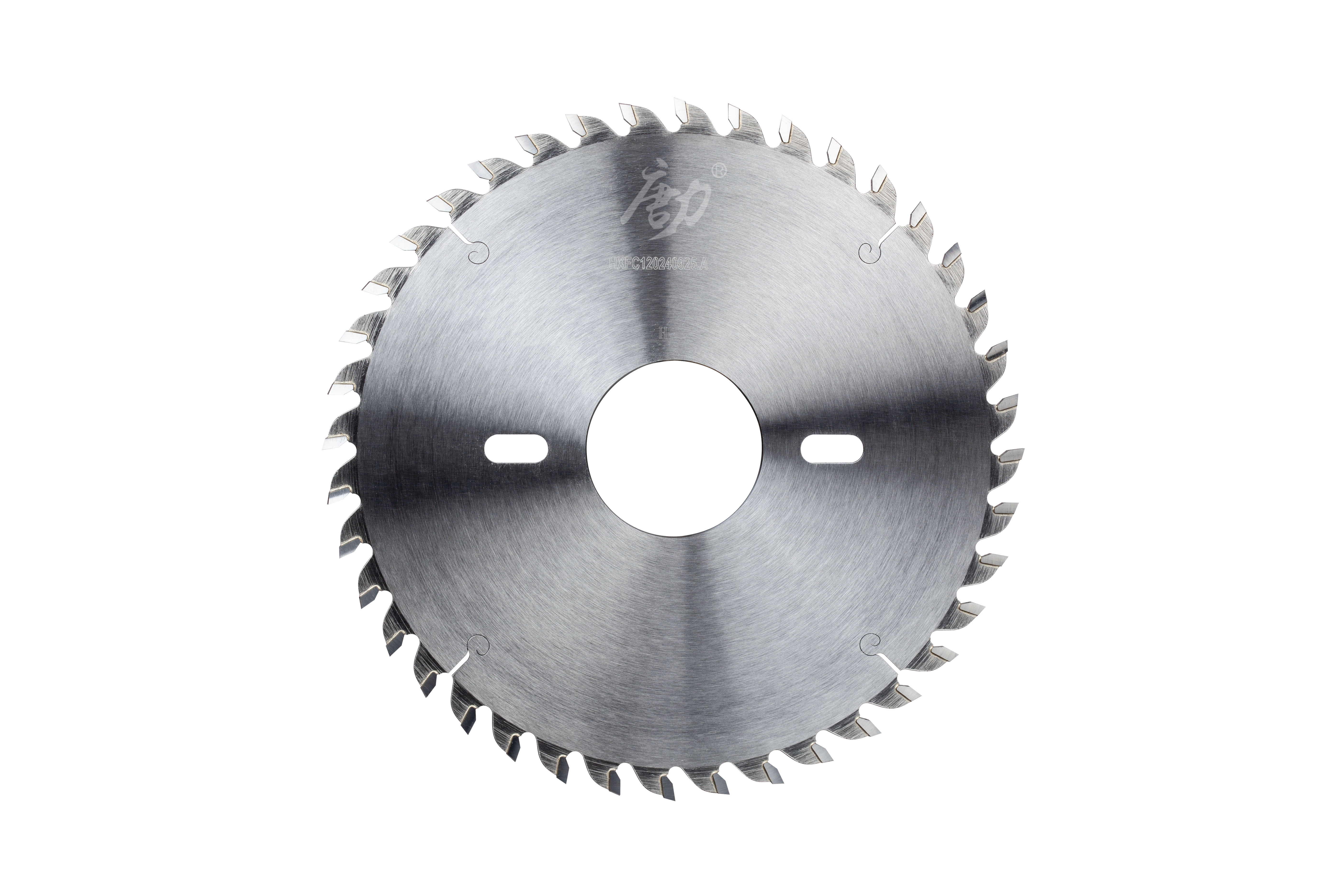
Selecting a proper precision cutting tool requires deeply understanding its metallurgical makeup. Standard carbide formulations suit general woodworking or rough carpentry. However, electronic-grade applications demand ultra-fine micro-grain carbide structures. Micro-grain tips feature extremely dense particulate structures bound together securely. They offer vastly higher wear resistance under extreme lateral stress. They hold sharp, geometrically perfect edges much longer when slicing through dense aluminum alloys and highly abrasive fiberglass substrates.
Tooth geometry directly dictates your final surface finish quality. Two primary grinds dominate the market:
Triple Chip Grind (TCG): This complex grind represents the absolute industry standard for hard plastics, aluminum, and abrasive electronic composites. It alternates between a flat raker tooth and a chamfered cutting tooth. TCG effectively prevents fragile materials from chipping or shattering during entry and exit.
Alternate Top Bevel (ATB): ATB teeth feature alternating left and right angles. They work exceptionally well for cross-cutting softer materials. ATB has extremely limited use in electronic fabrication. It typically only applies to specific, softer polymer enclosures where shearing action takes priority over impact resistance.
Kerf width measures the exact thickness of the cut left by the blade. Thin-kerf designs significantly reduce overall material waste during high-volume production. Conserving raw material proves absolutely crucial when processing highly expensive electronic alloys or specialized laminates. A narrower kerf inherently reduces cutting resistance. This efficiently lowers the electrical amperage draw on your machinery.
However, thin metal plates require exceptional tensioning to remain stable at high speeds. Manufacturers cut intricate, precisely calculated expansion slots into the steel blade body using industrial lasers. These specialized slots maintain crucial plate tension as temperatures inevitably fluctuate during operation. They effectively absorb harmonic vibration, ensuring your cuts remain perfectly straight and chatter-free.
An optimized TCT saw blade dramatically alters standard production timelines and labor allocations. Superior cut quality directly eliminates the need for expensive post-cut grinding or manual secondary deburring. Skipping these tedious secondary operations drives massive operational savings across your entire facility. Your sensitive electronic parts can move directly from the cutting station straight to final assembly without any unnecessary detours.
Fabricators often debate the distinct merits between multi-material and dedicated blade profiles. Some blades feature universal geometries rated for cross-functional use. They can theoretically tackle mild steel, aluminum heat sinks, and dense polycarbonates. They offer great flexibility for dynamic job shops handling diverse daily requests. However, universal blades always compromise slightly on maximum performance and overall longevity. Dedicated, material-specific blades will consistently outlast general-purpose tools in a demanding, high-volume production run.
Measuring true tool lifespan requires accurate, consistent tracking protocols. You should measure usable blade life based on the total linear inches cut before professional regrinding becomes necessary. Compare this reliable metric against the rapid, unpredictable replacement rate of standard abrasive discs. Abrasive wheels wear down continuously. They constantly shrink in diameter and lose surface speed. Carbide tips maintain their exact cutting depth, profile, and geometric integrity until they finally require a specialized sharpening procedure.
Metric | Traditional Abrasive Discs | Tungsten Carbide Tipped (TCT) |
|---|---|---|
Heat Generation | Extremely High (Causes thermal distortion) | Low (Heat transfers efficiently to the chip) |
Secondary Deburring | Mandatory for safe assembly | Entirely eliminated in most cases |
Diameter Retention | Shrinks continuously during use | Remains perfectly constant |
Ideal Application | Scrap metal, rough destructive cuts | Precision electronic enclosures, PCBs |
Transitioning to a modern industrial saw platform requires immediately addressing your machinery stiffness and overall stability. Tungsten carbide is an incredibly hard substance. However, it remains notably brittle under lateral stress. TCT blades are notoriously unforgiving of excessive vibration or spindle deflection. You must utilize exceptionally rigid, heavy-duty machinery anchored securely to your shop floor. Using hand-held tools or loose, worn-out spindles inevitably leads to immediate carbide tooth fracture. Spindle runout must remain strictly within tight manufacturer tolerances, often measured in mere thousands of an inch.
Machine operators must carefully match feed rates and rotational speeds (RPM) to the specific material composition. Incorrect speeds introduce severe operational risks and rapidly ruin expensive tooling. Pushing the material through the blade too fast overloads the gullets. This aggressive action causes catastrophic tooth breakage. Conversely, feeding material too slowly causes the carbide tips to rub weakly rather than aggressively chip away material. This unnecessary friction builds up immense heat, ruins the temper of the steel plate, and guarantees premature tool dulling.
Coolant and lubrication strategies vary drastically by material type. Dry cutting is often perfectly acceptable for certain mild steels and abrasive composite boards. Adding fluid in these specific scenarios might create a messy, abrasive slurry. That slurry actually accelerates premature tool wear. However, cutting extruded aluminum enclosures demands highly effective lubrication strategies. You must employ micro-drop lubrication systems or fine mist sprayers. They apply a microscopic layer of specialized cutting oil directly to the cutting teeth. This crucial protective barrier prevents soft, heated aluminum from melting and galling directly onto the carbide tips.
Procurement professionals must evaluate vendor capabilities rigorously before switching tooling brands. Reliable industrial suppliers eagerly provide explicit RPM guidelines, comprehensive material compatibility charts, and detailed chip-load formulas. They should also offer custom arbor sizing services. A flawlessly perfect fit for your specific machinery is non-negotiable. A poorly seated arbor hole creates dangerous runout, ruins concentricity, and destroys cut quality immediately.
You should never commit to a massive bulk purchase without executing a tightly controlled testing protocol. We strongly recommend running a documented, rigorous pilot test first. Procure two or three distinct tooth-count variations designed for a specific fabrication task. Run them side-by-side under identical shop conditions. Document the machine amp draw, measure the micro-burr formation under magnification, and determine which exact geometry yields the cleanest edge on your electronic substrate.
You must also proactively consider your ongoing sharpening infrastructure. Even the absolute finest carbide teeth wear down eventually. Investigate whether your facility has access to a reliable local sharpening vendor. Complex TCG profiles require precision CNC grinding equipment to accurately restore their original compound angles. A highly skilled sharpening service dramatically extends the useful lifecycle of your tooling investments. They effectively turn a short-term consumable expense into a manageable, long-term operational asset.
Selecting the ideal carbide tooling for delicate electronic fabrication demands a strategic, data-driven approach. You must carefully balance the initial tool procurement cost against massive downstream operational savings. Investing in high-quality blades ensures faster cycle times, flawlessly clean edges, and strictly cold cuts. These benefits actively protect your sensitive electronic components from catastrophic thermal rejection.
We advise fabrication teams to take immediate action on the production floor:
Audit your current scrap rates caused specifically by thermal distortion or heavy burr formation.
Track exactly how many abrasive discs your operators consume weekly to establish a baseline metric.
Consult directly with reputable tooling manufacturers to perfectly match exact RPM limits and kerf widths to your specific CNC or manual machinery capabilities.
A: No. Wood blades feature aggressive positive hook angles. These specific angles will aggressively grab and tear into metal or dense electronic composites, creating highly dangerous kickback. Electronic and metal cutting requires a specialized negative or zero-degree hook angle. This tailored geometry ensures strict operator safety and consistently produces a flawlessly smooth final finish.
A: Lifespan varies heavily based on the specific steel alloy, overall machine rigidity, and precise operator feed rates. You should establish a reliable baseline by carefully tracking the exact performance of your first blade. Count the total linear inches cut. This data allows you to calculate an accurate, facility-specific replacement schedule for your unique shop environment.
A: Yes. This proves especially true when cutting PCB substrates like FR4 or fiberglass, alongside specific industrial plastics. Carbide cutting processes produce extremely fine, sharp chips and potentially hazardous airborne dust. You must actively mitigate these particles using specialized extraction systems. Proper ventilation directly ensures vital operator safety and protects expensive surrounding machinery components.