Views: 0 Author: Site Editor Publish Time: 2026-08-15 Origin: Site


Achieving tear-out-free cuts in highly abrasive materials presents a severe daily commercial challenge. Melamine, medium-density fiberboard (MDF), and veneered plywood contain harsh glues and resins. These composite panels quickly degrade standard cutting edges during continuous production runs. You need pristine finish quality straight off the machine. Clean cuts minimize expensive secondary sanding and reduce edge-banding preparation time. However, you also must maintain acceptable tool lifespans to keep daily production schedules running smoothly.
Standard high-speed steel blades remain entirely obsolete for modern production environments. They dull rapidly, burn delicate materials, and destroy your profit margins through constant replacement. Transitioning to specialized industrial carbide tooling is strictly mandatory today. Upgrading your tooling protects your operational profitability and ensures consistent part quality. This article provides a definitive evaluation framework for modern operations. We will explore selecting, deploying, and maintaining commercial-grade cutting tools in professional panel processing. You will learn how precise geometries and proper maintenance directly impact your daily yield.
Tooth geometry (ATB, TCG, Hi-ATB) dictates cut quality and material compatibility far more than raw tooth count.
Premium tungsten carbide blades require a higher upfront investment but yield a lower cost-per-cut due to extended sharpening cycles and reduced material waste.
Matching the blade's hook angle to the specific machine (table saw vs. sliding panel saw) is critical for operator safety and feed rate consistency.
Regular maintenance—specifically resin removal and professional sharpening—is essential to validate the ROI of commercial-grade blades.
Many production managers struggle when evaluating tooling acquisition expenses. High-speed steel tools fail remarkably fast when cutting dense composite panels. A premium tungsten carbide blade changes this operational dynamic entirely. It routinely outlasts basic steel equivalents by up to 50 times in highly abrasive materials. You will pay a higher initial price for premium metallurgy. However, you achieve a dramatically lower operational cost per cut over the tool's usable lifespan. Extended sharpening cycles keep your machines running without constant intervention. Reduced material waste directly improves your bottom-line profitability.
Thermal stability plays a vital role in heavy manufacturing environments. High-friction operations generate extreme heat levels. Thick MDF ripping tasks can quickly warp standard steel tool plates. Industrial carbide handles these elevated temperatures effortlessly. It retains sharp edge integrity while resisting thermal expansion. Heavy-duty steel plates backing the carbide resist physical distortion. The brazing process uses tri-metal foils to absorb shock and disperse heat efficiently.
Not all carbide materials perform equally on the shop floor. Manufacturers blend different grades for specific market segments. Consumer-level tools typically use standard micro-grain carbide. They handle occasional crosscuts reasonably well for hobbyists. Professional production facilities require industrial-grade sub-micron carbide. You should look for strict C3 or C4 industrial ratings. Sub-micron grades pack denser particles into the cobalt binder matrix. This density provides superior physical impact resistance. Edge retention increases significantly under heavy daily loads.
Best Practice: Always specify C4 industrial-grade carbide for continuous MDF and particleboard processing.
Common Mistake: Buying cheap micro-grain blades for high-volume cabinet production. You will waste valuable labor hours on frequent tool changes.
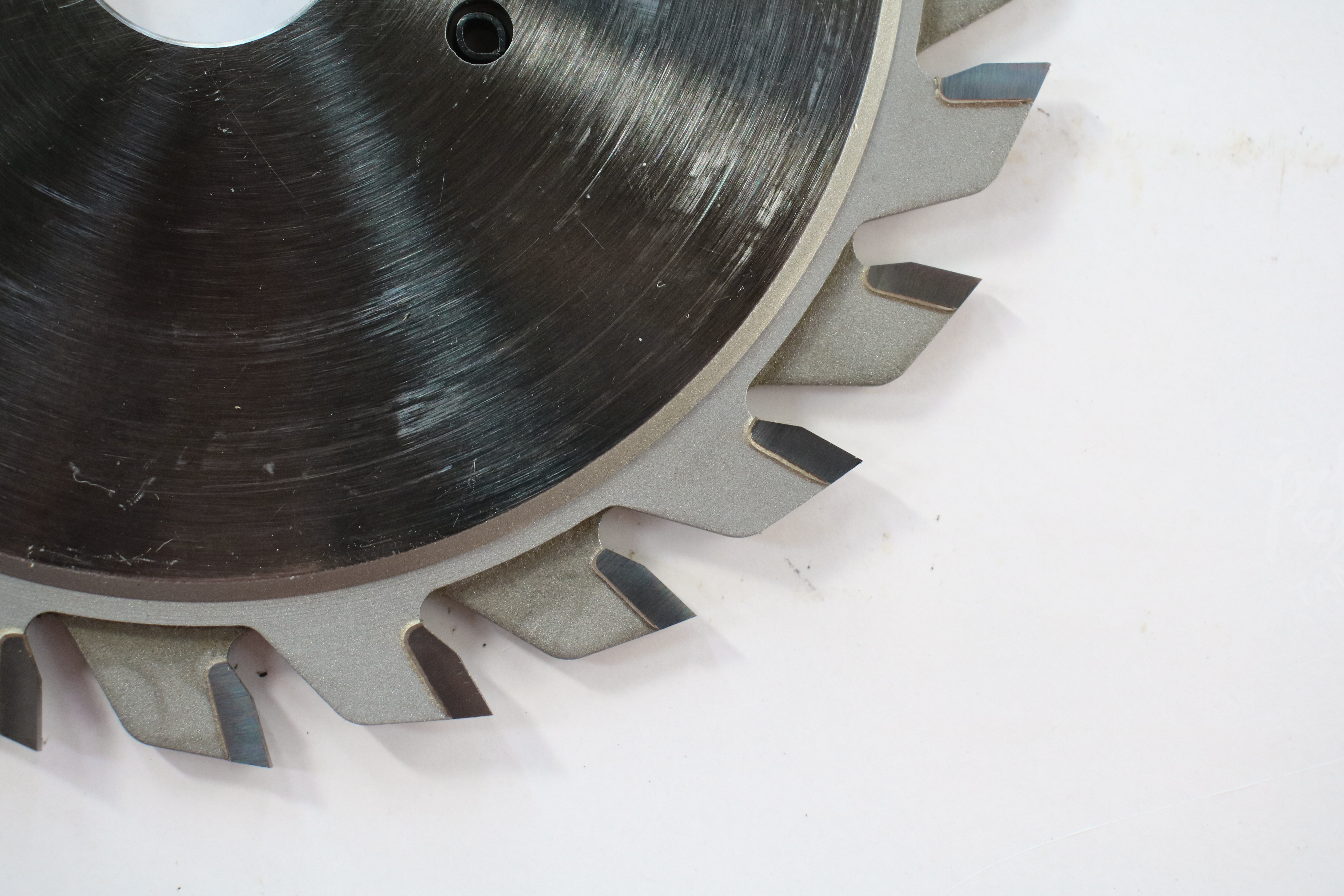
Selecting a reliable woodworking circular blade requires understanding several mechanical trade-offs. Many operators mistakenly believe higher tooth counts automatically deliver smoother cuts. This dangerous assumption causes significant production problems. More teeth directly increase friction and generate excessive heat inside the kerf. You must push material slower to compensate. High tooth counts violently resist rapid feed speeds. You must find the correct mathematical balance between cut smoothness and feed resistance.
Kerf width dictates overall material removal and machine power requirements. You must choose carefully between thin and full kerf designs.
Full Kerf (1/8"): Heavy continuous cutting demands maximum stability. High-horsepower cabinet saws drive these thick plates efficiently. The massive steel body prevents sideways deflection during dense ripping operations.
Thin Kerf (3/32"): Underpowered jobsite saws benefit greatly from thinner plates. They remove significantly less material per pass. Thinner cuts conserve valuable exotic lumber. However, thin plates carry a much higher risk of harmonic vibration and deflection.
Hook angle controls exactly how the teeth engage the wood grain. Aggressive angles behave entirely differently than shallow ones. Matching the angle to your machine ensures operator safety.
Positive Hook (10° to 20°): The teeth pull material downward aggressively. This geometry enables incredibly fast feed rates. Solid wood ripping operations rely exclusively on high positive hook angles.
Negative or Low Hook (-5° to 5°): The teeth scrape rather than hook the wood fibers. Feed speeds drop noticeably. These angles naturally prevent climbing. Sliding miter saws demand negative hooks to avoid kickback. Double-sided melamine cutting also requires low hook angles to prevent top-surface chipping.
Material type strictly dictates your optimal tooth geometry. You cannot rely on a single profile for every manufacturing job. A dedicated furniture cutting blade utilizes highly specific grinds to handle complex laminates.
Alternate Top Bevel (ATB) provides a standard multi-purpose solution. It handles solid wood and standard plywood perfectly. The alternating teeth create an excellent slicing action. They cleanly sever fragile wood fibers. However, ATB tips dull moderately fast in abrasive composite panels.
High Alternate Top Bevel (Hi-ATB) delivers flawless surface results. The exceptionally steep bevel angle excels on delicate veneers. Melamine processing frequently requires precise Hi-ATB geometry. It guarantees tear-out-free edges without scoring blades. However, serious implementation risks exist. The fragile, sharply pointed tips break very easily. They require frequent and highly specialized professional sharpening.
Triple Chip Grind (TCG) serves as the ultimate production workhorse. High-volume MDF and particleboard processing require unmatched durability. TCG geometry prioritizes extreme edge life over absolute cut perfection. The alternating flat and chamfered teeth withstand massive physical impact forces. The chamfered tooth roughs out the center. The flat tooth follows behind to clean the corners. Shops frequently pair TCG profiles alongside a dedicated scoring system.
Flat Top Grind (FTG) handles specialized heavy ripping tasks. It cuts perfectly flat-bottomed joinery channels. You use FTG profiles for cutting grooves and dados in solid lumber. The broad flat teeth act like tiny chisels. They clear bulk material rapidly.
Geometry Type | Primary Material | Cut Quality | Durability | Sharpening Difficulty |
|---|---|---|---|---|
ATB | Solid Wood / Plywood | Very Good | Moderate | Low |
Hi-ATB | Veneers / Melamine | Excellent | Low | High |
TCG | MDF / Particleboard | Good | Excellent | Moderate |
FTG | Solid Ripping / Joinery | Fair (Flat bottom) | High | Low |
Large-scale processing requires specialized machinery setups. Single blade configurations face severe mechanical limitations. Achieving tear-out-free cuts on double-sided laminates proves incredibly difficult. A standard blade inevitably chips the bottom surface as teeth abruptly exit the cut. Specialized hollow ground geometries help alleviate this slightly. However, they dull quickly and carry a steep price premium.
Production facilities universally rely on sophisticated scoring blade systems. A split or conical scoring panel saw blade mounts directly in front of the main cutter. It spins rapidly in a climb-cut direction. The scoring cutter precisely pre-cuts the brittle bottom laminate layer. This brilliant configuration enables operators to utilize highly durable TCG main cutters for the abrasive core material. Conical scoring blades adjust their kerf depth by raising or lowering the arbor. Split scoring blades use thin metal shims to precisely match the main kerf width.
Large diameter saws generate immense harmonic noise during operation. Vibration ruins perfectly good edge cuts. Expansion slots manage extreme thermal expansion during heavy shifts. Polymer-filled laser cuts dampen harmonic resonance effectively. They absorb microscopic vibrations before they ever reach the carbide tips. These structural features stabilize the heavy steel plate under massive loads. They dramatically improve the final finish quality.
Even the absolute finest carbide saw blade for woodworking cannot fix underlying machine-level inaccuracies. Operators frequently blame poor cut quality on the tooling itself. Runout and arbor run-off ruin edge finishes instantly. You must measure arbor flange runout using a magnetic dial indicator. The operational tolerance should remain strictly below .002 inches. Fix misaligned bearings or warped flanges before condemning your expensive tooling.
Resin accumulation presents another severe hidden danger. Pitch builds up closely behind the cutting edges rapidly. This sticky residue mimics a dull edge perfectly. It increases feed friction dramatically. Heat builds up fast and scorches your expensive lumber. Implement a strict, non-caustic cleaning schedule. Lye-based oven cleaners chemically attack the cobalt binder holding the carbide together. Soaking tools weekly in citrus-based solutions extends periods between mechanical sharpenings safely.
A premium carbide tipped saw offers strictly limited sharpening cycles. You must respect these absolute mechanical limits. Professional CNC technicians grind away microscopic layers of carbide to expose fresh edges. Eventually, the silver tip brazing becomes structurally compromised. The critical tooth geometry alters irrecoverably after too many aggressive grinds. Discard tools immediately when the carbide thickness drops below safe operational thresholds.
Selecting the correct cutting tools transforms your shop's daily productivity. You must prioritize material type first to dictate the correct tooth geometry. Next, match the kerf width and hook angle strictly to your machinery's capabilities. A low-horsepower saw requires a thin kerf, while heavy production demands full kerf stability.
Do not compromise on carbide grade for production furniture cutting. The hidden operational costs of material rework always exceed the initial premium of top-tier tools. Establish a strict weekly cleaning regimen to remove resin. Finally, partner with a reputable CNC sharpening service to maximize your investment lifespan.
A: You should never rely on fixed chronological timelines. Monitor the tool for specific physical warning signs instead. Increased feed resistance, visible burn marks on the wood, and micro-chipping on delicate melamine indicate dullness. Send the tool for professional sharpening immediately when operators feel increased resistance pushing the material.
A: No. Combination blades compromise heavily on both tasks. Ripping requires a low tooth count and positive hook to clear chips quickly. Melamine requires a high tooth count and negative hook to prevent chipping. Finish-grade furniture manufacturing requires dedicated task-specific tools to achieve acceptable quality.
A: Burning usually stems from three main root causes. You might have an incorrect hook angle for the machine. Pushing the material too slowly causes excessive friction. Alternatively, heavy pitch buildup mimics a dull edge. Using a high-tooth-count crosscut profile for thick ripping operations also traps heat and burns lumber instantly.