Views: 0 Author: Site Editor Publish Time: 2026-08-08 Origin: Site


Processing abrasive materials like MDF, high-density fiberboard, melamine, and particleboard takes a severe toll on standard tooling. You often face unacceptable edge chipping, rapid resin buildup, and frustrating machine downtime for constant blade changes. This drastically impacts your daily production schedules. Upgrading to a diamond saw blade for artificial board changes this dynamic entirely. It serves as the definitive standard for high-volume, defect-free manufacturing. Unlike traditional carbide options, polycrystalline diamond slices through abrasive resins effortlessly.
This guide provides a pragmatic framework for production managers and procurement teams. We will help you evaluate critical tool geometry and machine compatibility before purchasing. You will learn how to match scoring blades, control vibrations, and maximize your tooling lifespan. Implementing the right strategies ensures exceptional finish quality on every single panel you process.
TCO over Upfront Cost: A PCD diamond saw blade costs significantly more upfront but typically outlasts carbide (TCT) by 50 to 100 times in engineered wood applications.
Application Specificity: Achieving chip-free cuts on laminated or melamine-faced boards requires a matched set (main saw + scoring saw).
Operational Readiness: Maximum ROI requires highly rigid machinery; excessive spindle runout or vibration will fracture brittle polycrystalline diamond tips.
Maintenance Limits: Factoring in sharpening logistics (typically 2-4 regrinds per blade) is critical for accurate lifecycle cost calculations.
Artificial boards present uniquely harsh machining challenges. Manufacturers pack MDF, HDF, and particleboard with dense glues and highly abrasive resins. These synthetic binders, particularly urea-formaldehyde, act essentially like sandpaper against metal cutting edges. These harsh chemical compositions rapidly destroy standard carbide tools. Furthermore, the inconsistent density across composite panels causes uneven edge wear. This forces your operators to stop production frequently. Every single tool change halts the manufacturing line, bleeding valuable efficiency and frustrating your team.
Switching to an industrial diamond cutter eliminates this constant disruption entirely. A polycrystalline diamond (PCD) edge withstands severe chemical and physical abrasion safely. It maintains a razor-sharp cutting profile for weeks or even months of continuous operation. Implementing a PCD diamond saw blade transforms your workflow overnight. You avoid the hidden expenses of constant machine downtime. Productivity naturally soars when operators focus on running panels instead of constantly swapping dull blades. We regularly see facilities transform their daily output metrics simply by upgrading their primary cutting tools.
However, diamond tooling possesses distinct physical limitations. We must remain highly transparent about where PCD technology fails. You should never use it on natural solid wood containing hidden knots. The extreme hardness of diamond makes it quite brittle. Impacting metal staples, stray nails, or dense natural knots will fracture the tips instantly. Furthermore, PCD requires highly stable factory equipment. Avoid using these premium blades on unstable, low-horsepower table saws. They demand industrial rigidity to survive and perform correctly.
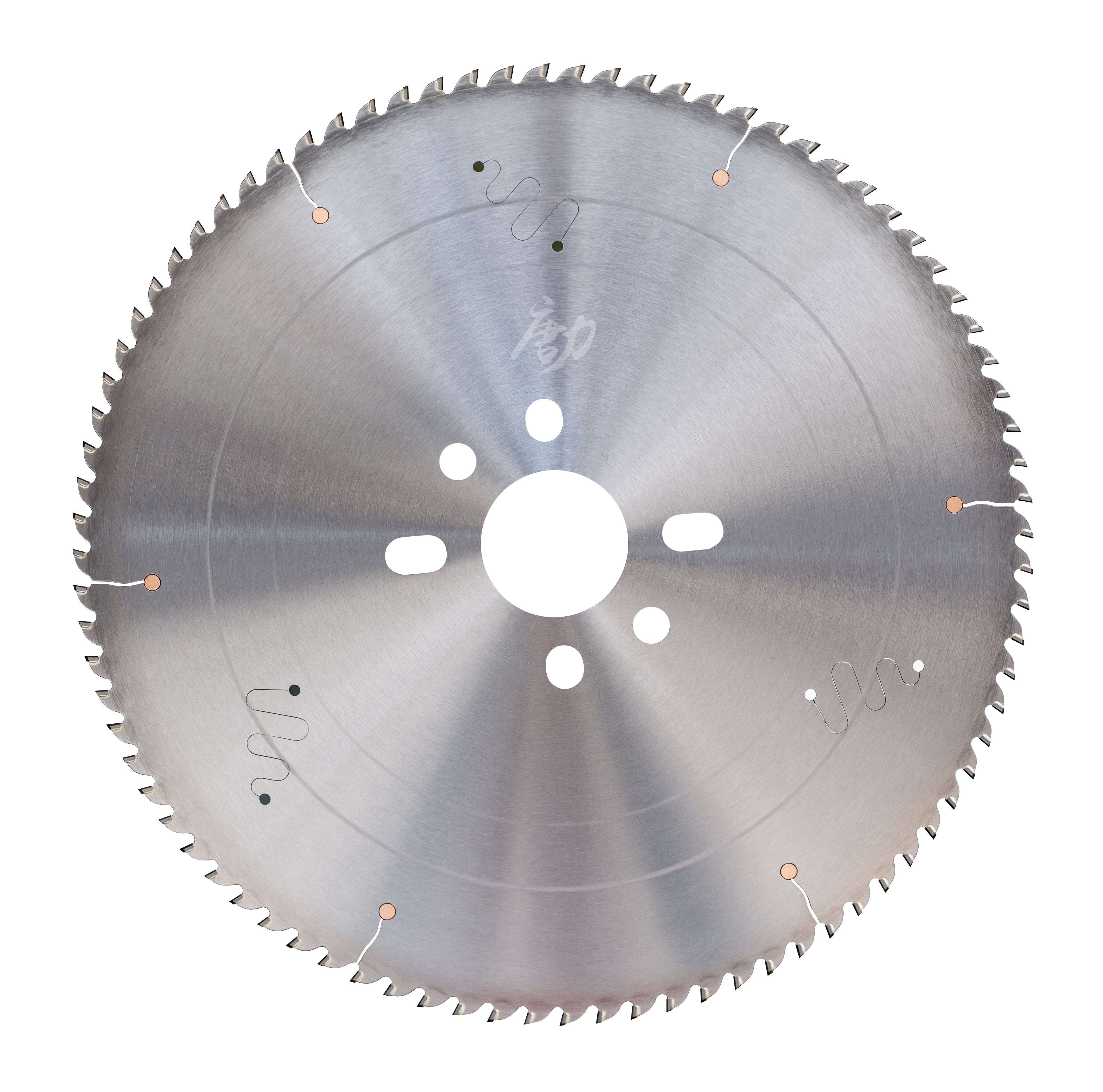
Selecting the correct artificial board cutting blade requires understanding the broader machinery ecosystem. You need a coordinated set of specialized tools for optimal results. A single standalone blade cannot handle complex laminates successfully.
Main saw blades handle the heavy primary cutting action. Their diameters typically range between 250mm and 450mm for industrial applications. You must choose the exact tooth count based on board thickness and specific feed speeds. Thinner boards generally require more teeth to prevent blowout. Thicker materials need fewer teeth to clear chips efficiently. Operators usually run these main blades between 3000 and 4500 RPM to maintain proper tip velocity.
Scoring saw blades prevent bottom-edge tear-out on double-sided laminates. They pre-cut the fragile melamine or veneer surface just ahead of the main saw. You have two primary choices when configuring your machine:
Conical Scoring Blades: These feature a tapered tooth design. You adjust the scoring kerf width simply by raising or lowering the blade's cutting depth through the table bed.
Adjustable Scoring Blades: These consist of two interlocking split-blade pieces. You adjust their exact kerf using thin magnetic shims to match the main blade perfectly.
Hogging options remain vital for automated panel sizing operations. Large-scale CNC machines and automated beam saws use hogging units for efficient waste management. They pulverize edge offcuts into fine dust instantly. This keeps your extraction systems free of long wooden splinters. You must integrate these components effectively. Operating an engineered panel saw requires precise harmony between all moving cutting elements.
Not all diamond blades offer identical performance on the factory floor. You must evaluate specific design features carefully before committing to a purchase. Tool geometry strictly dictates the final finish quality on your panels.
Manufacturers adapt traditional carbide profiles specifically for diamond tools. The Triple Chip Grind (TCG) excels at cutting hard laminates without chipping the top layer. We also see Alternate Top Bevel (ATB) equivalents engineered into high-end PCD designs. The shear angles determine how cleanly the blade slices through delicate surface papers. A highly aggressive shear angle slices cleanly rather than punching forcefully through the material.
Plate quality heavily influences daily cutting performance. A true precision diamond blade relies on superior steel tensioning. Look carefully for laser-cut expansion slots along the blade body. Premium manufacturers often fill these specific slots with specialized sound-dampening polymers. These dampening lines absorb harmonic vibration during high-speed operation. Lower vibration means significantly less noise on the factory floor. More importantly, it drastically reduces the risk of micro-fractures in the fragile diamond tips.
Tip size dictates the long-term value of your tooling investment. Always check the physical diamond tip height before purchasing new stock. Standard consumer tips might measure just 4mm tall. Premium industrial options usually offer a robust 6mm height. Larger tips safely allow for multiple professional sharpening cycles.
Design Feature | PCD Tooling Characteristics | Standard Carbide (TCT) Equivalents |
|---|---|---|
Grind Profiles | Modified TCG, specialized Hollow Face designs | Standard ATB, TCG, Hi-ATB configurations |
Shear Angles | Highly aggressive for ultra-clean laminate exits | Moderate angles; wears down quickly on resins |
Plate Technology | Extensive laser dampening slots filled with polymer | Basic expansion slots without advanced dampening |
Heat Resistance | Exceptional thermal stability during continuous runs | Prone to heat warping under heavy friction |
Buying a premium blade represents only half the battle for manufacturers. Your machinery must meet stringent operational standards to ensure operational success.
Diamond is exceptionally hard but inherently brittle. Machine tolerances must remain exceptionally tight at all times. Bearings, arbors, and spindles require minimal runout. We strongly recommend keeping spindle runout strictly below 0.02mm. Excessive vibration will micro-fracture the delicate diamond edges almost instantly. You must verify your machine's mechanical health before mounting new PCD tools.
Operators must monitor feeds and speeds carefully during production. Matching the machine RPM with appropriate feed rates prevents catastrophic friction buildup. If you feed panels too slowly, the blade generates excessive localized heat. This quickly burns the board edge and glazes the diamond tips. Conversely, feeding material too fast overloads the main motor. This aggressive feeding risks massive chip-outs and dangerous blade deflection.
Blade height also plays a crucial role in mitigating defects. Setting the main blade too high increases the exit angle aggressively. This causes massive blowout on the top surface. You should typically set the blade just 15mm to 20mm above the panel thickness.
You must follow strict handling and storage protocols daily:
Never set a diamond blade down on a bare metal machine bed.
Always use protective plastic or rubber sheaths during factory transport.
Clean resin buildup using dedicated chemical solvents, never harsh wire brushes.
Store all blades vertically in custom wooden racks to prevent plate warping.
Train new operators thoroughly on these specific fragility protocols.
Securing a reliable tooling vendor matters just as much as the product itself. You need strong, localized support for ongoing maintenance and emergency repairs.
Evaluate your local service partners rigorously before committing your business. Sharpening PCD is nothing like grinding standard carbide tools. Your chosen tooling service center must possess highly specialized EDM equipment. Traditional diamond grinding wheels cannot shape polycrystalline diamond accurately. Electrical Discharge Machining (EDM) technology uses precise electrical sparks. This process carefully erodes the worn diamond edge back to a razor-sharp profile. If a vendor lacks this machinery, they cannot service your investment properly.
Use this strict shortlisting logic when comparing potential tooling vendors:
Industry Certifications: Do they hold recognized industry credentials for precision tooling maintenance?
Custom Capabilities: Can they quickly modify bore sizes or add specific drive pinholes for your European machines?
Turnaround Times: Do they guarantee specific lead times for complex EDM sharpening?
Selecting a proactive vendor ensures you never face unexpected production halts. They help keep your critical tooling inventory ready for demanding shifts. Proper service partners act as an extension of your own maintenance team.
Vendor Capability | Why It Matters for PCD Tools |
|---|---|
In-House EDM Machinery | Essential for restoring microscopic diamond edges without thermal damage. |
Custom Pinhole Configuration | Ensures exact mounting compatibility with specific European panel saw hubs. |
Guaranteed Turnaround Times | Minimizes the number of expensive backup blades you must keep in stock. |
Dynamic Balancing Service | Prevents high-RPM harmonic vibrations causing brittle tip fractures. |
Upgrading to specialized diamond tooling represents a strategic operational investment. It secures exceptional finish quality across your most demanding production runs. You completely avoid the constant interruptions associated with traditional carbide blades. Clean, chip-free edges on fragile melamine and laminated boards become your daily standard.
Audit your current scrap rates and blade change frequency immediately. Document exactly how many hours you lose to machine downtime each month. Build an internal performance case using this concrete operational data. Identify which machines suffer the highest tool wear rates. Once you fully understand your current inefficiencies, you can confidently solicit vendor quotes. Choose service partners equipped with proper EDM capabilities. This proactive approach guarantees your engineered wood production remains highly competitive, efficient, and profitable for years to come.
A: Not recommended. While it can physically cut wood, natural knots or hidden impurities easily chip the brittle diamond tips. It is strictly engineered for uniform, highly abrasive artificial boards.
A: Typically 2 to 4 times. This depends heavily on the original height of the PCD tip and the extent of the wear or damage before operators pulled it from production.
A: Chipping with a sharp blade usually points to machine vibration, incorrect blade height, a misaligned scoring blade, or an incorrect feed rate, rather than the blade itself.
A: Standard sizes are off-the-shelf, but custom pinhole configurations or specific kerfs typically require a 2 to 4-week lead time from specialized industrial manufacturers.